
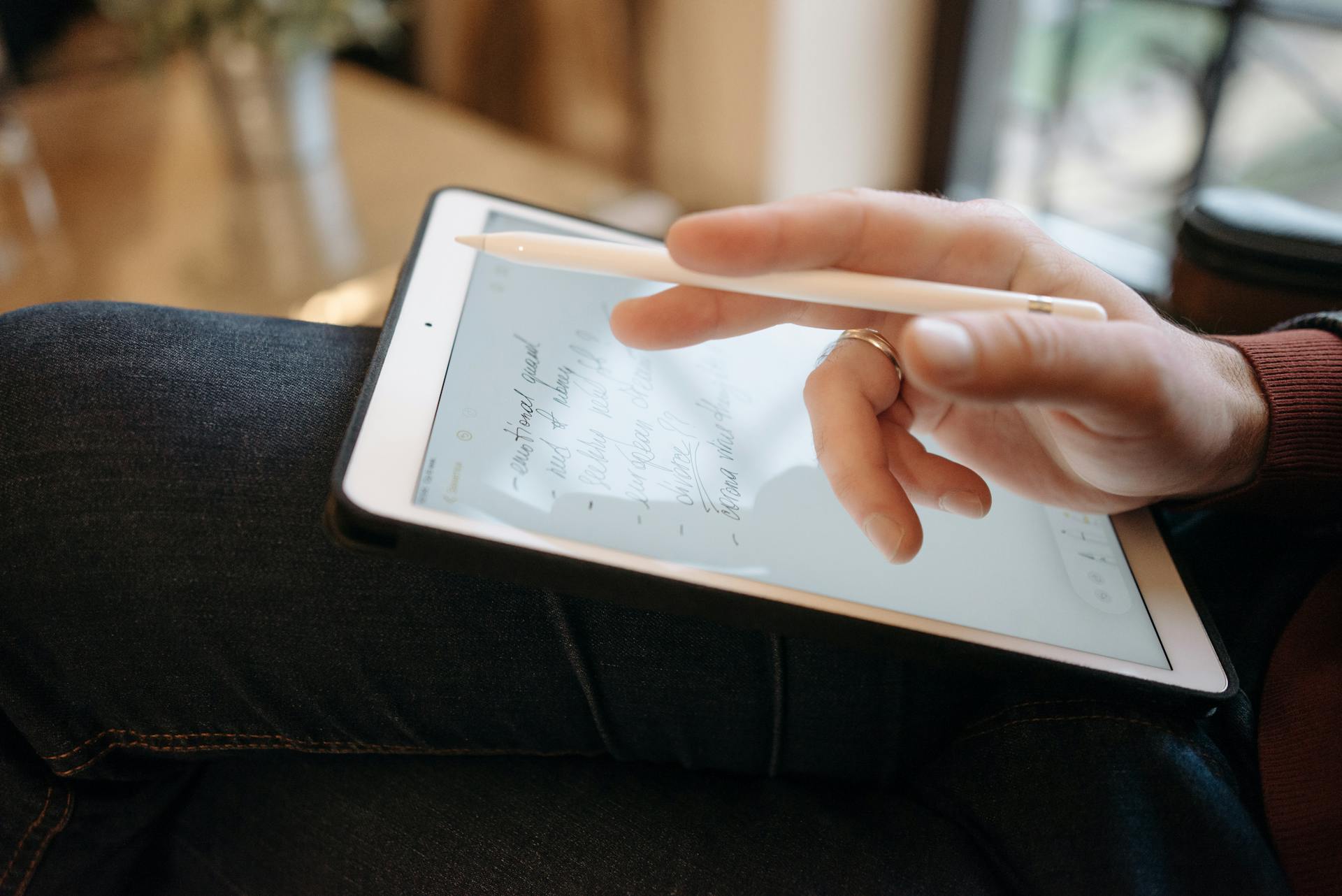
Digital note-taking has always carried a compromise. Tablets with backlit screens offer responsiveness but cause eye fatigue. Paper notebooks provide comfort but lack digital flexibility. The evolution of E-Ink stylus technology is dissolving this boundary.
Modern E-Ink devices paired with advanced styluses combine pen-on-paper satisfaction with digital organization. The transformation centers on a simple question: can digital writing feel as natural as analog?
CONTENTS
The physics of natural writing
Writing feels natural when sensory inputs align. The eye sees marks forming. The hand feels resistance. The brain receives feedback about pressure, angle, and speed. Traditional touchscreens disrupt this—they’re too smooth and introduce lag.
E-Ink technology paired with electromagnetic resonance (EMR) styluses solves several problems. EMR requires no battery, eliminating weight issues. The stylus detects position, pressure, and tilt with precision.
The Boox Pen Plus White exemplifies this approach. Supporting 4,096 pressure levels, it captures the range from light sketches to bold strokes. The 1.6mm replaceable tip provides friction that mimics paper texture, creating tactile feedback absent from glass.
Pressure sensitivity captures expression
At 4,096 levels, modern E-Ink styluses detect subtle pressure variations. Light touches create thin lines. Firm pressure produces bold marks. The transition is smooth and continuous.
This sensitivity transforms handwriting from digital approximation into genuine expression. Users report their handwriting on E-Ink tablets looks more natural than on other digital devices. The device isn’t forcing adaptation.
Tilt recognition adds dimension
Beyond pressure, tilt recognition introduces another layer. Hold the stylus vertically for fine lines. Angle it for shading and broader strokes. This mirrors how artists use pencils.
Tilt sensitivity detects angle between stylus and screen. Combined with pressure data, it modifies stroke appearance. This enables shading techniques impossible with pressure alone and allows natural line width variations.
Friction engineered to feel like paper
Glass screens are too smooth—pens glide without control resistance. Too much friction causes drag. The balance matters enormously.
E-Ink devices use specialized stylus tips. Fiber tips around 1.6mm diameter create friction without scratching. The sensation mimics quality paper, providing resistance for control without requiring excessive pressure.
Platforms like Einktab emphasize devices optimized for this paper-like experience. The goal is recreating the satisfying resistance that makes writing comfortable for extended periods.
Magnetic attachment and ergonomic design
Magnetic attachment keeps styluses accessible without cases. The pen attaches to device edges, secured but easily removed.
Ergonomic design matters for prolonged use. Most E-Ink styluses measure around 9mm diameter—similar to quality pens—with weights around 15-20 grams. This provides substance without fatigue.
Triangular grips prevent rolling and provide natural finger positioning. Some models include programmable buttons for switching tools or undoing actions without touching the screen.
Battery-free operation
Electromagnetic resonance represents a significant advantage. Unlike active styluses requiring charging, EMR pens draw power from devices through electromagnetic fields.
No battery means no charging anxiety. The stylus works whenever you reach for it. No battery also means balanced weight. The pen remains functional indefinitely without maintenance.
Einktab users particularly appreciate this reliability. A stylus that never needs charging becomes a dependable tool like the mechanical pencils it replaces.
Software optimization
Hardware capabilities need software that leverages them. Modern E-Ink devices run specialized note-taking applications understanding the technology’s characteristics.
Applications reduce refresh artifacts—the ghosting that can occur. They implement palm rejection so hands rest naturally while writing. They support multiple pen types (ballpoint, fountain pen, pencil) with distinct characteristics.
Software also manages latency. Optimized applications achieve latency under 30 milliseconds—fast enough for immediate writing feel.
Applications beyond note-taking
While note-taking drives stylus development, applications extend further. Technical professionals annotate engineering documents. Academics mark up research papers. Artists sketch concepts. Students solve problems and diagram concepts.
Einktab platforms support diverse uses through device selection and accessory ecosystems. Different stylus types serve different needs—fine tips for detail, broader tips for sketching, erasers for corrections.
Versatility stems from creating tools that feel natural. When writing on E-Ink feels like paper, applications become limited only by imagination.
The evolving future
Stylus technology continues advancing. Haptic feedback simulates paper texture through controlled vibrations. Some vary vibration based on stroke type—pencil strokes feel different from pen strokes.
Color E-Ink displays support stylus input, enabling color-coded notes and highlighted annotations. Faster refresh rates reduce latency. AI integration could convert handwriting to typed text while preserving natural writing.
The focus remains on replicating analog writing’s best aspects while adding digital capabilities. The goal is making digital writing genuinely preferable—offering paper’s comfort with digital organization and backup.
The quiet revolution demonstrates that writing’s future need not abandon its past. By recreating what makes paper satisfying in digital form, these tools bridge analog tradition and digital possibility. The stylus becomes synthesis—the best of both worlds.

Hey, I’m David. I’ve been working as a wireless network engineer and a network administrator for 15 years. During my studies, I also worked as an ISP field technician – that’s when I met Jeremy.
I hold a bachelor’s degree in network engineering and a master’s degree in computer science and engineering. I’m also a Cisco-certified service provider.
In my professional career, I worked for router/modem manufacturers and internet providers. I like to think that I’m good at explaining network-related issues in simple terms. That’s exactly what I’m doing on this website – I’m making simple and easy-to-follow guides on how to install, set up, and troubleshoot your networking hardware. I also review new network equipment – modems, gateways, switches, routers, extenders, mesh systems, cables, etc.
My goal is to help regular users with their everyday network issues, educate them, and make them less scared of their equipment. In my articles, you can find tips on what to look for when buying new networking hardware, and how to adjust your network settings to get the most out of your wi-fi.
Since my work is closely related to computers, servers, and other network equipment, I like to spend most of my spare time outdoors. When I want to blow off some steam, I like to ride my bike. I also love hiking and swimming. When I need to calm down and clear my mind, my go-to activity is fishing.